



The John C. Fremont Healthcare District finally had some relatively good financial news to deliver last week.
After two months of $1 million losses, the district was back in positive territory for April with an operating gain of $45,000.
By itself, maybe not much to brag about. But given recent losses, its remarkable.
It compares with an operational loss of $929,000 in March and $997,000 in February. It is better than a year ago, April 2025, when the district had an operational loss of $230,000.
But this being JCF, even good news comes with caveats.
CEO Stacey Kuzak said the gain is mostly attributable to delayed reimbursements coming in from private insurers, Medicare and Medi-Cal.
The district’s unrestricted cash on hand, a common metric of financial stability, increased from 68 days in March to 79 days in April.
But here’s the big picture/reality check: For the last 10 months the district is $5.7 million in the red.
There is also some confusion about the accuracy of the April numbers because of an earlier, more detailed, spreadsheet that showed different figures.
The discrepancy was pointed out by pharmacist Peter Choi, who is also a certified public accountant, during the JCF Board of Director’s meeting May 27.
Kuzak explained that some numbers may have been incomplete when the spreadsheet was uploaded last week to the district’s website.
But an updated slide from the district, prepared days after the meeting, still showed a discrepancy in some numbers, creating skepticism among former board members about the accuracy of the analysis.
A new CFO
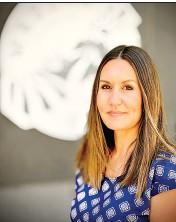
It was an awkward start for the district’s new Chief Financial Officer, Jennifer Mitchell, who was making her first financial presentation to the board last week.
The district has not had a full-time CFO since Fred Vitello, who took on the Interim CEO title, before he suddenly resigned last October.
Mitchell, who will be working remotely from her home in Alaska, said she is currently trying to get a handle on staffing needs in the finance department.
JCF has relied heavily on the work of its comptroller, Waqar Farooq, CEO Kuzak and a mix of various financial and revenue cycle consultants.
The district is now trying to ween itself from some of those consultants that can cost anywhere from $30,000 to $40,000 a month.
Mitchell will be paid about $7,000 a month, a bargain by comparison, Kuzak noted.
Mitchell echoed a familiar lament from JCF executives when she said the FY 2025-26 budget — developed by former CFO Vitello — was unrealistic in its anticipated revenue.
Mitchell talked of “budget right sizing” in the future and using “real time forecasting.”
New hospital update
The district continues to work with the state of California to get construction plans approved for a new hospital to meet California earthquake standards by January 2030.
JCF has already received a deadline extension to June 2030.
Jim White, the manager of the new hospital construction project, said the architects recently sent revised plans to the California Department of Health Care Access and Information (HCAI).
“They are looking at concrete, the steel, you name it,” White said.
The district is currently in the first round of revisions and White said there are usually three rounds before final approval.
New board member Rob Fox asked for a timeline to be developed of “construction milestones so people can understand what’s going on.”
White replied that the schedule might be “a bit mushy at this stage,” but he could certainly sketch out a general timeline.
“All of these projects are filled with challenges and roadblocks,” White cautioned.
When the final estimated cost of the new hospital project is determined the district will apply for a construction loan from the U.S. Department of Agriculture (USDA) for rural hospitals.
There are some advantages tailor made for public projects, White said, such as lower interest rates and longer loan terms.
The exact amount of the loan will depend on how much “up front” money the district puts into the construction project. Instead of a 30-year loan, the hospital could also lower its annual payments with a 35-year loan.
Funds from Measure O — a 1 percent sales tax until the year 2062 — will be used as collateral for the loan.
Since it was approved by county voters in 2022, Measure O has brought in $12.7 million.
The money is earmarked for the design, construction and operation of the new hospital. So far, even before breaking ground, $4.2 million has been spent on architectural drawings, civil engineering and project management.
Nearly $9 million remains in the Measure O fund.
But even with Measure O as collateral, the USDA will have serious questions about the district’s overall financial viability.
“There is a need to improve the financial situation” to get the loan, White said. “All hands are on deck at J.C. Fremont, I assure you.”
But the district doesn’t want to improve its balance sheet too much as it seeks forgiveness for another loan from HCAI for distressed hospitals.
The district has spent $6.4 million from the HCAI loan, but is still sitting on nearly $4 million.
The HCAI loan was to be used in part to find new revenue streams.
District administrators and board members worry HCAI will wonder why more money hasn’t been spent, will look at JCF’s cash position and demand the district start repaying the loan.
Mitchell, the new CFO, said she recently talked to five other hospitals that have applied for loan forgiveness from HCAI. Three were denied and two had their loans forgiven.
The district will apply for loan forgiveness from HCAI in August or September. If it is denied, the district must begin repaying the loan.
Another door opens?
There is a new potential funding opportunity that seems tailor made for the John C. Fremont Healthcare District.
The Rural Health Transformation Program is a $50 billion initiative established under H.R. 1 to strengthen rural health systems with unique challenges, like access to care, workforce shortages and infrastructure gaps.
California has been awarded $233 million under the program.
CMS Surveys
The district is wrapping up a flurry of four surveys conducted in the last six months by the most feared regulator in health care, the Center for Medicare & Medicaid Services (CMS).
After a surprise inspection of medical staff last December, the district recently had its plan of correction accepted.
That survey found “serious deficiencies” that indicated a “systemic breakdown in governance oversight, medical staff competency, controls and contracted service management.”
Now the district is awaiting a follow-up inspection from CMS, which has pushed back its deadline to June 26.
CMS has also accepted the plan of correction submitted for a March CMS survey of the skilled nursing facility, known as the Ewing Wing, that found only minor issues.
Culture change
Human Resources Director Rachel Jones outlined several reforms to payroll, compliance and documentation. But the bottom line was fairly humanistic.
Jones described a previous unhealthy dynamic where people were held accountable for roles they didn’t fully understand. She said the attitude was: “They should know what they’re doing.”
“Ninety-nine percent of the people want to do the right thing, but they’ve had a motivation by fear to get the job done. Who would want to say, ‘I don’t feel comfortable knowing what I should be doing,’” Jones said.
CEO Kuzak said the reforms in HR were long overdue.
“This is the industry standard,” said Kuzak, motioning to the briefing presentation.
Chief Nursing Officer and Chief Administrative Office Rachel Key said the reforms are making a difference in recruitment too. “We have former staff wanting to come back,” Key said.
New board members
The May 27 meeting was also the first for the district’s newest board members — Jon Wurl and Fox — who were selected May 20 from among five candidates.
They replace former board chair Wendy Ryder Priola and Craig Burchfiel, who resigned in March citing acrimony behind the scenes on the board.
Board chair Rose Fluharty alluded to past drama in welcoming the new board members.
“I’d like to encourage a just culture to come to the board,” she said.
She said she wants to know if people are being mistreated, but referenced the California open public meetings law, the Brown Act, that limits sidebar conversations outside of board meetings.
“I’m hoping to hear how people are doing, even if it takes time in a meeting,” Fluharty said.




Responses (0)