


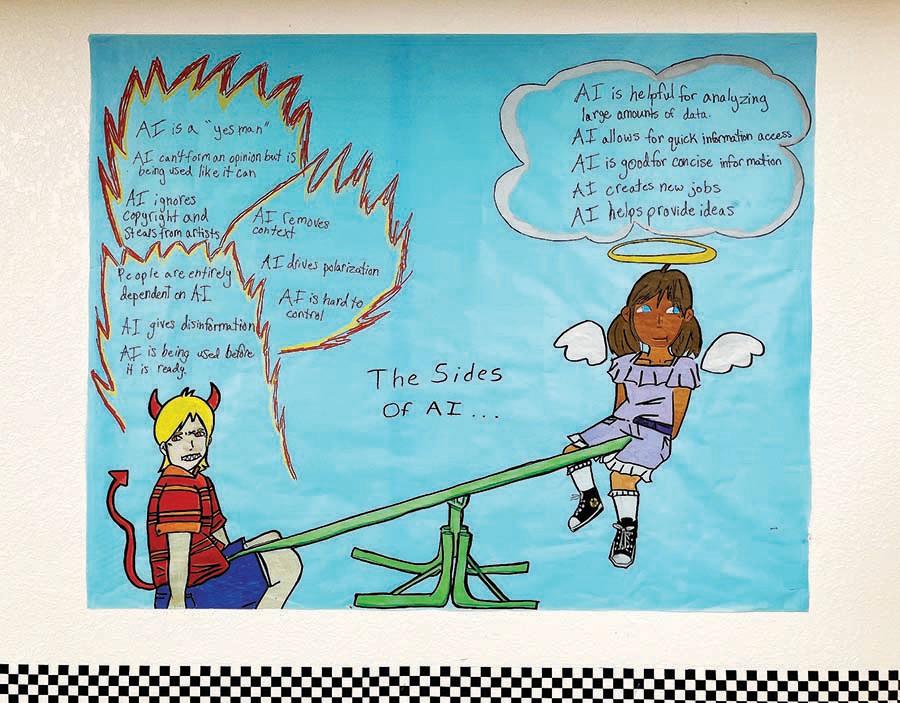

A group project by the Theory of Knowledge class on the pros and cons of AI.
Artificial Intelligence has entered the chat in Badger Country.
Students at Yosemite High School recently were challenged to rearrange the “invisible curtain drawn between our human experience and the cold logic of algorithm” in an exploration of Artificial Intelligence and its place in current time — and in their lives.
The resulting exhibit, “All Possible Futures,” was on display at Badger Gallery on March 11 with students in the Visual Arts Department, Theory of Knowledge Class and Chukchansi Language Classes participating.
The Visual Arts Department analyzed the work of contemporary AI art pioneers like Beeple, Refik Anadol, Brian Chang, Holly Herndon and Mat Dryhurst.
“These artists are on the cutting edge of what is possible when employing Artificial Intelligence as an art making tool,” wrote artist and educator Evan Higgins, known simply as “Higgins.”
“To some it is a new renaissance. AI is a prosthetic for the mind that can bridge the gap between imagination and execution, making our collective work more effective than ever before. Yet, for many, it is a source of deep lamentation.”

“AI ANGST WALL” included work by Tianna Starner, Sadie Didrickson, Michelle Tran, Lysje VanDeWall, Naomi Sanchez, Rorey Booth, Ozlynn O’Connor and Emily Kirby.
From environmental impacts to the potential for “cognitive atrophy” and whatever lies between, “we are caught between the promise of a collaborator that can solve our greatest puzzles and the fear of a parasite that flattens our representation and negates our purpose.”
Visual Arts students were tasked with collaborating with a Large Language Model of their choosing to find a way to work with the tool effectively.
Theory of Knowledge (TOK) students participated following a recent unit examining technology and the “knower.” The class is taught by Rebecca Hardison and Alicia Meyer.
Artworks in the “AI ANGST WALL” serve “as an unfiltered mirror to the ‘id’ of our modern era, capturing the visceral anxieties of a generation standing at a daunting historical threshold,” students wrote.

Artwork by Elyssa Sanchez.
“Within these works you will see the weight of a student body that has weathered a global pandemic, a spike in mental health issues presumably brought on by social media and technology, political and economic uncertainty, war and climate crisis.”
One submission considered the duality in the role of technology and AI on humans.
Another contribution had students covering an aspect of AI with the goal of educating people about the topic.
Students in the Chukchansi Language Class used AI to create culturally relevant and meaningful images for the long list of “at risk verbs.”
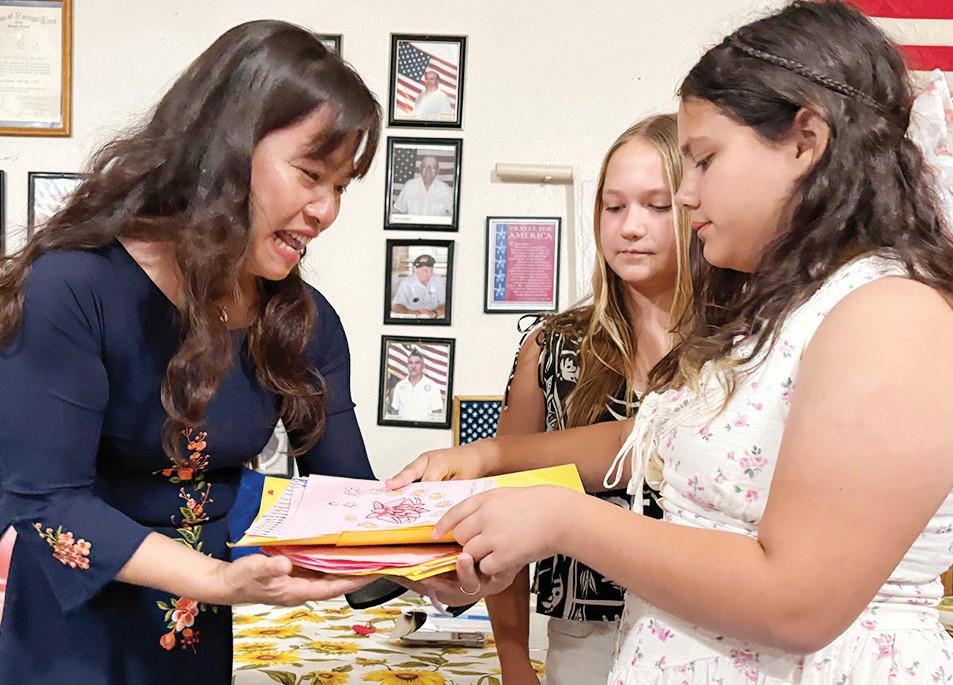
Language teacher Kim Lawhon’s students shared images they made for some of the words they are working to not forget in Chukchansi. They are phrases in English but are spoken as a single verb in Chukchansi.
“Without conscious effort to remember the verbs most students are likely to try to directly translate English phrases rather than recall the single Chukchansi term.”

Artwork by Naomi Sanchez.
A definition and AI image was made to place around the classroom as a reminder of the terms.
“With the images posted around the room we hope that we can remember to use the single verb in Chukchansi and not translate several English words instead,” Lawhon said.
Students were also able to analyze different AI platforms to reflect on culturally appropriate outputs.
They discussed which platforms seem more culturally responsive and what improvements are still needed to make AI images more useful. Students reflected on how they can contribute to solutions in the future.
Students in all disciplines responded to the call with enthusiasm and a tremendous amount of talent and understanding.
“Many chose a path of seamless synthesis, charting their dialogue with the machine to find a new kind of harmony,” Higgins stated in the show’s invitation.
“Others chose to stand on ethical ground and create works expressing a direct opposition to the tool. For these artists, the work is a record of their hard-earned craft held up against an automated world to prove that the human mistake still has value.”

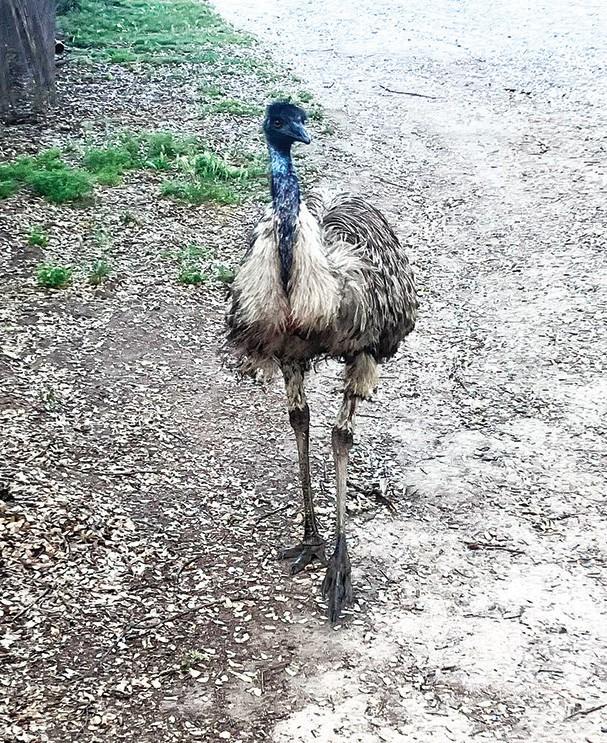
Image by Wyatt Lawhon.
Higgins said the result was a showcase that functioned as a mirror, “reflecting our greatest hopes for progress and our most intimate fears of being replaced.”

Image by Isabella Ivey.

Image by Olivia Gutschall.

Image by Lauren Wynn.

Shown is a collection from the Theory of Knowledge class including the anonymously submitted “Very Brave Statements,” and another reflecting on different ways in which AI is affecting society.
Responses (0)