




Amanda White
Last month I was invited to go along on a mycology hike at the McKenzie Preserve out near Fresno/Clovis.
I thought it could be cool but even if I ended up not being interested, it was an excuse to go to the preserve where there is always something beautiful and interesting to see.
It’s always nice to have an opportunity to take photos.
Along with Sierra Foothills Conservancy, the event was led by a UC Merced grad student named Chris Bivins who is pursuing fungi and mushrooms as his field of study.
The information Chris provided was absolutely incredible.
He explained that without fungi, nothing around us would be growing.
We see random mushrooms in nature all the time, but the function of fungi is so much larger than just mushrooms.
Fungi exists all around us in the air, soil, water and even on our bodies.
As a distinct kingdom of life, they form complex, hidden networks called mycelium that connect forests, digest waste and underpin entire ecosystems.

Shown is the collection of about 20 varietals of mushrooms which were collected during the hike.
I think what I found most interesting is the DNA of fungi.
Fungi possess incredibly complex and versatile DNA, which has only recently begun to be fully understood through sequencing technologies.
Studies have revealed that fungi are genetically closer to animals than plants.
Chris explained that you can have two mushrooms that look almost exactly the same, but wouldn’t be even close to being genetically the same.
He gave an example that a human and a mosquito would be more closely related genetically than the two mushrooms that look almost exactly the same.
Throughout the mycology walk Chris also explained several different types of fungi and mushrooms.
Right off the bat he explained to be cautious and not to just eat any mushroom you find.
One of the first mushrooms he picked up was one most people refer to as a “death cap” and it was right there close to the trail.
In the California foothills, there’s a species of mild-tasting edible mushrooms common to oak forests named amanita constricta which is extremely similar looking to their poisonous family members amanita phalloides and amanita ocreata.
Considering the latter two are ominously and respectively known as “death caps” and “Western destroying angels,” not identifying them correctly can have deathly consequences to humans if ingested, including liver and kidney failure.
The tricky part is that if you do eat one, it may be an entire day or two before you start to show symptoms that something is wrong.
By then it’s too late.
These mushrooms are beautiful but they’re one of the most toxic things you can find.
Chris explained that it’s fine to touch them, but if you eat them it’s fatal.
Along with certain mushrooms, another fungi which is edible are truffles.
Truffles are a little harder to find but if you know what signs to look for you might find some.
Chris explained that truffles have a scent to them and that’s how you can tell how mature they are.
The mature ones are a little more difficult to find.
Like some other types of fungi, truffles have a symbiotic relationship with tree roots in that they both benefit each other’s presence.
The fungi depend on the tree root for sugars or lipids, while the tree root receives water and soil nutrients from the fungi.
After some time walking and collecting mushrooms we could find, we all combined our findings on one table where Chris sorted them into groups.
I think there were around 20 different varietals collected between all of us.
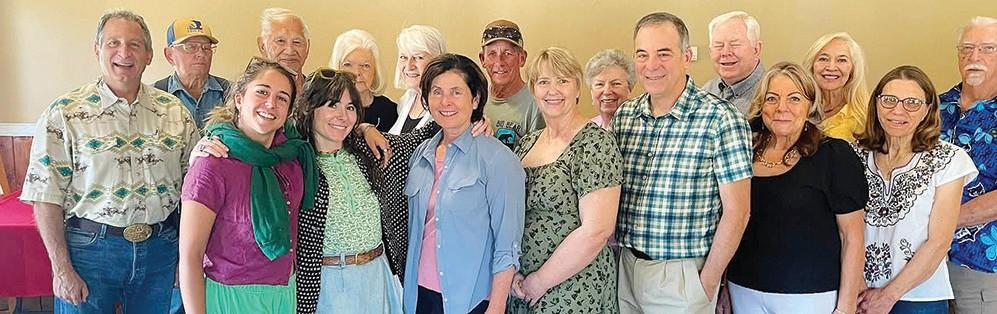
Besides the walk and being out on the preserve learning about fungi, I think what I enjoyed most was the people in this group were truly enjoying something they were interested in.
Chris talked for over an hour at the end just answering questions and engaging in conversation.
My mind was sort of blown after hearing so many cool facts about fungi and its presence here.
It’s pretty incredible when you really think about it.
Shout out to Sierra Foothill Conservancy for all of the work they do.
They have several classes, hikes and events which can be found online at sierrafoothill.org
Amanda White is a staff writer at the Mariposa Gazette and can be reached at amanda@mariposagazette.com.


Responses (0)