


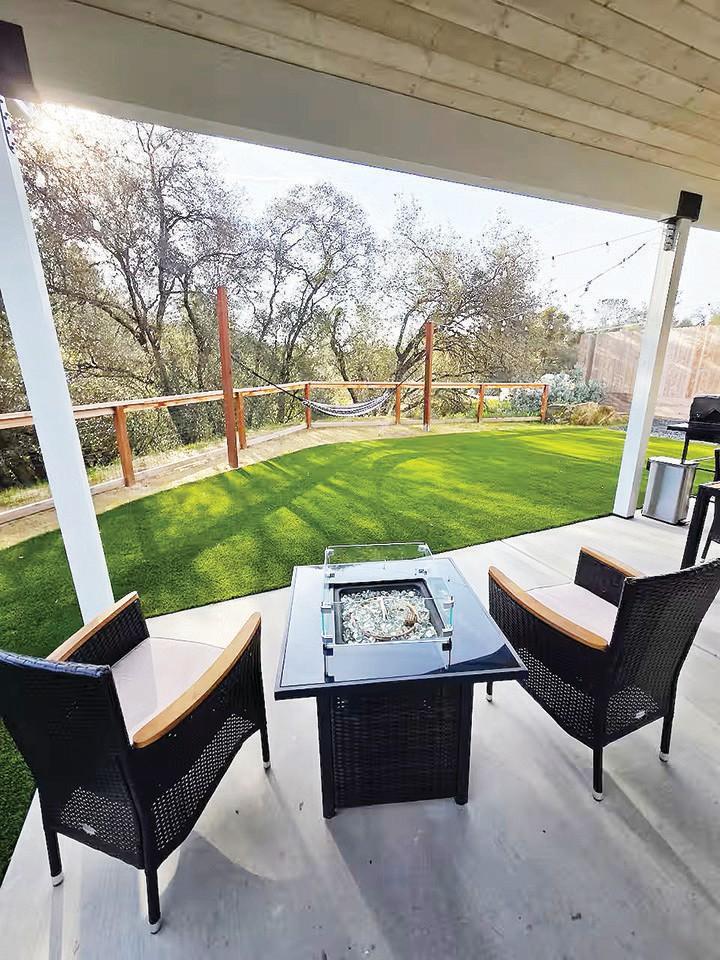

Pictured is a view from “Cozy Eco Hut 2” Airbnb in Coarsegold.
The town of Coarsegold received special recognition recently when Airbnb unveiled its first-ever America Off-the-Map list spotlighting lesser-known and rural destinations where shortterm rentals are driving new opportunities for local tourism.
“We’re trying to grow tourism outside the big cities and bring the economic benefits to rural communities,” said Laura Spanjian, global head of public policy for the online marketplace.
They’re doing this using a marketing campaign and paid media to share the curated list.
Airbnb characterized the 20-town list as “the rural destinations you haven’t heard of yet.”
The destinations were selected in collaboration with local partners, Airbnb hosts and team members across the U.S. The campaign is focused on small and medium-sized places that are truly “off the tourism map,” meaning they aren’t currently being promoted among the well known tourism hubs in the state.
These towns, like Coarsegold, offer new experiences and local culture for visitors to discover along with Airbnb stays to make it possible.
“Gold was discovered in Coarsegold in 1849, and the town has been pleasantly unhurried about everything since,” reads the Airbnb blurb dedicated to the town.
“Sitting in the Sierra Nevada foothills along the historic mining corridor, it offers antique stores, working cattle ranches and art studios alongside something the gateway towns closer to Yosemite’s south entrance increasingly can’t: space. The park itself is about 20 miles up the road, close enough for a day trip and far enough to avoid the parking queues and dawn check-ins that define the visitor experience further up Highway 41.”
Eighty-six percent of travelers say they’re interested in visiting remote or rural destinations, according to a Focaldata survey Airbnb commissioned. For Gen Z, those born between 1997 and 2012, that number climbs to 94 percent.
In 2025, the survey said, about 64 percent of all Airbnb guests in the U.S. came from within 300 miles of the destination, showing strong demand for trips close to home.
Once the visitors arrive, their impact spreads: 95 percent of travelers reported they’re likely to shop and dine locally, putting money directly into family-owned businesses, local farms and independent attractions that see tourist dollars less frequently, if at all.
“We want to spread those dollars to rural communities like Coarsegold,” Spanjian affirmed.
Across the country, 63 percent of U.S. Census tracts are home to active Airbnb listings but no hotels. Short-term rentals play a key role in helping disperse travel to communities like Coarsegold, Airbnb said, offering flexible accommodations where traditional hotels are limited and spreading the benefits of tourism to new areas.
Airbnb said hosts in these areas collectively earned nearly $10 billion in 2025, with spending creating new microeconomies in communities that have been less visited over time.
In addition to Coarsegold, communities were recognized in Sekiu, Wash.; Matador, Texas.; Pine Creek Gorge, Pa.; Alexandria, N.H.; Sodus Point, N.Y.; Stanley, W. Va.; Naalehu, Hawaii.; Keweenaw Peninsula, Mich.; Wilmington, Ill.; Arnaudville, La.; Fairview, Utah.; Snowflake, Ariz.; Pinos Altos, N.M.; Cedar Key, Fla.; Dubois, Wyo.; Goldfield, Nev.; Haines, Ark.; Fort Peck Lake, Mont. and Monte Vista, Colo.
“Short-term rentals have fundamentally changed who gets to benefit from tourism,” said Jordi Torres, Airbnb managing director, Americas.
“When travelers discover a unique Airbnb listing in a town they’ve never heard of, more than half say they’re inspired to visit for the first time. We want to help spread tourism opportunities to new areas to lessen the burden on crowded hot spots and give these communities the chance to benefit from this growing trend.”
For more on Airbnb’s first ever Americas-Off-the-Map list, visit news.airbnb.com/airbnb-reveals-america-off-the-map/



Responses (0)