


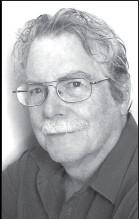

Charles Mosher
I’ve relocated to Texas where the Bar-B-Que is meatier, the pickup trucks are blacker and ICE is quite active.
Other than the Native Americans among us, we are all immigrants or descendants of immigrants. Several Mariposans I know are so proud of their immigrant ancestors that they wear outfits reflecting that culture.
But we all contribute to what makes our communities America: California, Mariposa and Madera. Or Texas.
Here I learned a lot, pretty darn quickly, y’all, about what’s been happening to immigrants and who has been helping them and their families.
Here’s my report:
Imagine you’ve had some coffee and are on the way to work. Halfway there, you get pulled over by three cars. Unmarked.
They pull you out, shove you into one of their cars and leave your vehicle by the side of the road, keys in the ignition. What happens next has been documented by a PTA Mom and working mother — let’s call her Lydia — who went through this experience.
“No time to say goodbye. No chance to grab belongings. (You) disappear in seconds, and (your) families are left broken. Once in custody, processing takes four to seven days. No beds. No blankets. Just concrete floors, cold enough to make your bones ache. Men lie shoulder to shoulder, like sardines. The smell of sweat and urine fills the room … There are not enough toilets, and they are never cleaned. The lights are kept on all night.”
Lydia had been taken from jail to the processing center.
“In the middle of the night, people are ordered to put on the same clothes they’ve worn for days. They are shackled at the wrists, waist and ankles. Chains rattle as they are linked together, marched in lines, loaded onto buses like livestock. On the buses and planes, the chains dig into skin until wrists are raw and ankles bleed.”
She was taken again, from the processing center to a detention center.
“Inside the centers, beds are two feet wide, thin plastic mats with no sheets. No ladders for the bunks, so old men have to be pulled up like children. Women are told to scrub toilets and floors with sanitary pads because there are no cleaning supplies. Showers have no curtains. Bathroom stalls have no doors.
“Breakfast is two pieces of white bread and a slice of processed cheese. Lunch is a scoop of watery oatmeal. Dinner is the same. Fresh fruit and vegetables do not exist inside. People drink from faucets, putting their mouths directly under the tap because there are no cups. If you have family sending money, you can buy (a cup) from the commissary. If you don’t, you drink like an animal. Hunger is constant.”
So “detention centers” are, basically, prisons.
“The lights never go off. Sleep never comes. Depression spreads like an infection. Some cry every night. Some stare at the ceiling for hours. Some try to end their lives. Requests for doctors are ignored, even when people collapse. Pregnant women are told to wait. Asthmatics go without inhalers. People with diabetes wait days for insulin.
“At any moment (even 2 or 3 in the morning), a tap on the shoulder means transfer or deportation. People are pressured into signing deportation papers they don’t understand. Families are never told. Children wait by the phone, never knowing if they will hear their parents’ voices again.
“Women and men report sexual harassment, but have no one to protect them. The guards, being part of a private corporation, often say that they can do whatever they want. ICE doesn’t reign there, they do. People who complain are punished with solitary confinement — locked alone in freezing cells for days or weeks, with nothing but a metal bench. Lawyers’ visits are canceled without reason. Court hearings are delayed or erased. Cases are lost in the system.”
Lydia has long been a part of her community. She worked hard at a full-time job, was very was active in her children’s school and opened her home to many other children when parents were busy elsewhere.
She had no criminal record. But her family didn’t hear from her for a week after she was taken. An older child dropped out of college to care for younger siblings and to get jobs, desperate to replace the family’s lost income.
The family didn’t know if their mother was deported or in prison, still alive or not. Lydia became fearful that her family might forget her.
A quick response organization:
The responses by the community to these attacks on our immigrant neighbors have been many. An organization stepped up to provide support and guidance to Lydia and her family.
This group of volunteers found a lawyer for the woman and paid commissary and phone fees so she could make a call to her family for five minutes once a day. When other women in the center without phone privileges were frantic to connect with their families, Lydia used part of her short phone time to ask her children to call those families and relay information.
This organization has helped 65 people like Lydia with support for the imprisoned person, and even more support for their families.
Without the breadwinner, many families need the basics — food, rent, utilities. They also need psychological and medical help to get through the first couple of months of this nightmare.
Over 350 volunteers help their neighbors in crisis and direct them to other support for the long legal battle ahead, often without income.
A bigger problem than the community knows:
How widespread is this cruelty?
Detentions appear to be increasing in this county compared with 2025. Accurate figures of how many are detained every day have been difficult to pin down (many people are trying).
But we know that ICE is not arresting and deporting only criminals, as they told us they would. Some research into ICE data from this county covering a two-year period from 2023 to 2025 revealed 1,691 detentions.
This included neighbors from Germany, Canada, Spain, Vietnam, Samoa, Romania, Nepal, India, Turkey, Norway and 16 more, not just Mexico.
In all, 27 different countries. For many of us, these include countries of origin for our own families. The county is losing vital contributors to its community.
Other than the Native people, we are all immigrants or descendants of immigrants from somewhere. Africa, Europe, Asia, Latin America, India, Oceana.
Immigrants have built the America we know. They harvest our crops, repair our roofs, prepare and serve our food in restaurants. And wash the dishes when we are done.
Twenty-eight percent of the physicians in the U.S. are immigrants according to Kaiser Family Foundation (a well-respected healthcare research organization) as are 38 percent of home health aides. Immigrants pay into Social Security. And they contribute 17 percent more in federal taxes than U.S. born citizens (Cato Institute).
“I was a stranger and you welcomed me.” (Matt 25:35):
The community that knew and loved Lydia raised $10,000 for her bail. She is finally out of the nightmare facility.
But the legal process before her is long and expensive. She can’t return to work, so her family is depleting their savings to pay her ongoing legal fees.
But the most serious long-term problems will be human. A younger daughter didn’t want to leave her mother to return to school. According to a family member, “her grades dropped. She doesn’t sleep well because of anxiety. She and our whole family have become fearful of police. I worry whether anyone would call police if they needed help.”
The stress on the young daughter is so great that she’s now in therapy. Lydia, who was a pillar of support in school, is now terrified to go there, even for awards ceremonies.
Lydia is no longer working, no longer active in the PTA, no longer contributing to the community. And the terror instilled by this experience will affect all the family and their neighbors for a long time.
“Just as you did to one of these … you did unto me” (Matt 25:40)”
1. Learn the truth of what’s going on.
2. Join an organization or church supporting immigrants.
3. There is a collaborative data fiber art piece locally, called “Belonging,” that holds vigil for our community and encourages civic discourse around immigration and detention. If you are interested in knowing more, visit (fiber-belonging.netlify.app).
California communities, like Texas, are experiencing a similar loss of neighbors and community members. We all need to protect the vulnerable people around us.
Dr. Charles Mosher, M.D., M.P.H., was Mariposa’s county health officer from 1988-2014. Prior to his work at Mariposa County, Mosher served in the Peace Corps, worked for the state of Georgia and served for 11 years with the Merced County Health Department. He can be reached at author@greaterstory.com.






Responses (0)