


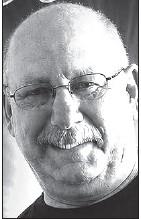

Codie Hart
Ever wonder where stations like Mariposa’s KRYZ got their start? Well, it turns out that these little stations were an early 20th century idea, and the start of a whole new kind of radio!
Although the concept of local non-profit public broadcasting began at universities like Iowa State and the University of Wisconsin in the early 1900s, the history is complicated and intertwined with the idea of nationalizing the function.
Following the appearance of university experimental stations, the idea of public radio gained incredible momentum and importance throughout the early 20th century. In 1921, the federal government issued the very first license to an educational institution at Latter-day Saints University in Salt Lake City.
In around 1925, the federal government, seeing the potential of locally based public radio, established what would become the National Association of Educational Broadcasters. It would be 1938 before the FCC set up a new class of non-commercial educational radio stations.
In 1949, the seaside town of Pacifica, Calif., began operation of KPFA, which is largely thought to be the first attempt at direct listener supported radio station. Public broadcasting branched into television in the early 1950s, and in 1962, President Kennedy made the first moves to supply public radio and television broadcasting with federal financial assistance to augment local funding.
With the new money came the branch into television, which became a focus at the time of available funding, and while that somewhat sidelined radio programming in general, it caused small local stations to be left behind almost completely.
Unfortunately for small public local stations like KRYZ, especially in rural areas like Mariposa, federal funding for what would become NPR, PBS and CBS flowed almost exclusively to either universities, larger markets or to federally recognized entities like the stations broadcasting locally on Indian reservations.
Then, as now, small public local market stations were left to fend for themselves for funding these small stations, even while being held to the same schedule of licensing and fees as other, bigger public stations.
KRYZ receives no federal or state money at all and is entirely funded by the listening audience. While all KRYZ employees are volunteers, there are still considerable infrastructure and licensing expenses. It isn’t cheap to run a radio station!
The genesis for public broadcasting was originally small market stations with a focus on purely local news, events, talent and entertainment. KRYZ continues to carry on that proud tradition in our community.
The FCC prohibits public radio from broadcasting commercials or engaging in on-air commerce of any type. This means that KRYZ is commercial free.
Great news for the listening audience, but the flip side is there is no ad revenue stream for the station.
Instead, one way the station earns money is to rely upon the Mariposa business community; local business sponsors who agree to donate an amount of money each month (or each year).
In return for the donation, KRYZ recognizes the sponsor businesses by name on the air often each day and informs the community that the sponsor is supporting local public radio. The spot also mentions the name, type of business and contact information for the sponsor.
The whole transaction is geared to helping the Mariposa community; the sponsors support Mariposa radio and the station supports Mariposa sponsors. Typically, KRYZ on-air talent records these spots, but sponsors can also record their own radio spots, as long as they don’t directly mention prices or commercial transactions.
The station monitors and edits these sponsor-created spots to ensure FCC regulations are complied with before they are aired.
Another type of revenue for the station is a direct donation, either one time, or regularly, by listeners who appreciate what the station is doing.
The third type of revenue is more elusive. As part of the radio station’s mission, KRYZ broadcasts community events, public service announcements or messaging from local nonprofit or government agencies. If the station is lucky, these entities will say thank you with a donation to the station.
KRYZ has a pack of high energy DJs and highly personable hosts that make the radio station pop and make it fun to listen to, and the focus is always on what matters to us right here in our mountain home.
In between DJ’d and hosted shows, KRYZ plays music intended to engage with our demographic here, with no regard for what major market radio is doing. The station loves to hear from you, and to find out what you want to hear, and when you want to hear it.
KRYZ is also a showplace for local talent. If you have an original (G rated!) song, or want to try your hand at a show, that’s what KRYZ is for! Check out the radio station’s Contacts page on thew web site at kryzradio.org for more information.
If you have questions about the radio station or want to hear about some particular aspect of KRYZ Radio, just let us know.
Codie Hart is the vice-president of the KRYZ Radio Board of Directors, a music lover who host the weekly show “Music Machine” and a longtime member of the Mariposa Community. He can be reached at codiehart@yahoo.com.





Responses (0)