


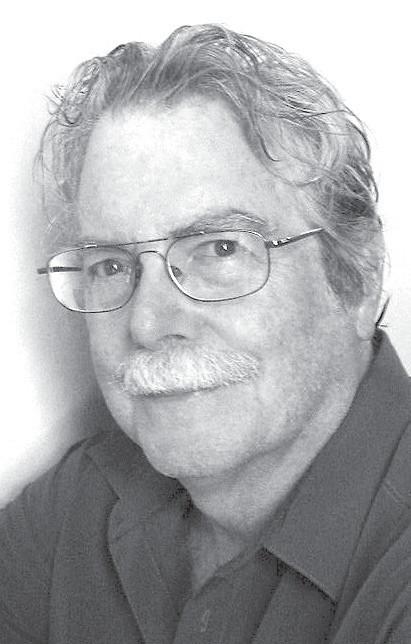

Charles Mosher
Here is an old medical aphorism the med school professors said. “If it walks like a duck and quacks like a duck, you must consider that it is most likely not a zebra.”
Med students and young physicians are dazzled by the most dramatic diagnoses. Does the patient have a fever? Must be malaria! Is the patient tired? Probably pernicious anemia!
We were taught to not get starry eyed about exotic diseases, because the diagnosis is most likely something more common.
Unfortunately, patients, because they are human too, are also dazzled by exotic diagnoses and remedies. Sometimes, to their detriment.
In our currently distorted society, politicians and some media have confused us such that we don’t know the difference between truth and the frequently-told lies. Worse yet, sick people can be desperate, confused and put off by the expense of medical care. They are vulnerable to quacks and scams.
Case # 1: A 25-year-old man decided to use an untested therapy for his ringworm. He injected mercury by vein.
Three months later he ended up in an ER with multiple problems. An X-ray of his chest and abdomen lit up like a Christmas tree. The mercury was scattered throughout his body (New England Journal of Medicine).
Where (or from whom) he got the idea to do this was not reported. But it was obviously horrible advice. Mercury poisoning is well documented and is a risk in extracting gold from ore.
It was also used in hat making. Brain damage from this toxicity gave rise to the expression, “mad as a hatter.”
Over the half decade I’ve been practicing medicine and observing people, I’ve seen a slow but spreading societal disillusionment with the medical establishment. This has created a fertile field for quacks, scammers and a few well-meaning but ill-informed people promoting “alternative treatments.”
Then came the internet.
Case # 2: People buy direct-to-consumer “food sensitivity tests” to self-diagnose foods that they suspect (often believe) are responsible for vague symptoms like fatigue, headaches and digestive problems.
Companies promise that a simple finger-stick blood sample can identify the immune system markers of reactions to hundreds of foods. “In the comfort of your own home.”
The antibody these tests detect is immunoglobulin G (IgG). Which, in fact, is an immune-memory antibody showing that your immune system recognizes that food is harmless.
Profits from this scam exceed $250 million a year. (“Clinical & Experimental Allergy” and “Skeptical Inquirer” journals).
In med school, our discussions of the immune system were limited by the minimal understanding of that human defense system at the time. “The time” was before the terrible AIDS epidemic.
We (science) learned a ton about the complexities of that system by studying what happens when it was no longer normal. (That’s a common way to understand a function of the human body because it’s hard to know what is happening when everything is functioning normally.)
The immune system is exceedingly complex: White cells, T cells, killer cells, B cells, antibodies, cytokines, the complement system and more. And it involves many of the body’s other organ systems.
My observation is that, since the onset of the AIDS epidemic, a vast swath of our society has convinced themselves that they are knowledgeable about the highly complex immune system. The result has been a lot of self-diagnosis and a ton of scams selling testing kits, “immune” remedies and stuff to “boost” the system.
BTW, a “boosted” immune system, is not a good thing. An over-active immune system causes many diseases (lupus, thyroiditis, rheumatoid arthritis and other “auto-immune” diseases).
Now the internet and various “influencers” amplify both the desperation of folks and the confusion between truth and lie. How can you sort through all this?
Quote # 1: “First, do no harm.” (Hippocrates, The Physician’s Oath. Around 400 BCE)
Physicians (and surgeons) are people. As such, they have flaws, defects and the propensity to make errors. Like all people.
But adherence to professional standards should protect patients from dangerous behavior. Nationwide, there’s a vigorous program of self-policing that takes place in hospitals and many clinics.
Physicians review and critique care by other physicians, educating or disciplining as needed. In California, the state licensing agency also investigates allegations of unprofessional behavior by MDs and, on a regular basis, doles out various punishments up to revoking their license to practice.
However, your best protection against being harmed by bad advice is to be alert to the danger signs:
1. Is the proposed therapy outside of traditional medical care? If so, that doesn’t automatically make it wrong or dangerous, but it is more likely to be.
2. Does it seem too good to be true? You know how that goes, right?
3. Is the proposed therapy expensive? Most quacks and many “alternative care” practitioners are in it for the money. Your money. Use your judgment to determine whether it’s the desire to help people or the love of cash that is motivating such folks.
Quote # 2: “Love of money is a root of all kinds of evil.” (Bible, I Timothy)
How can you avoid getting hurt and/or fleeced in health care?
1. When in doubt, feeling uncomfortable with a doctor or their advice, or when facing surgery, get a second opinion.
2. Be fully informed. Like a scientist, request all the information you can get. Ask about alternatives to the proposed diagnosis or treatment. Ask about the risk of adverse events. Maybe even ask to speak with others who have been in your situation.
3. Research the recommended therapy. Where does the scientific/medical community stand on the issue? If it’s not consistent with current medical practice, there must be a reason for that. Find out what that reason is.
4. If it’s a physician you’re dealing with, research their license. Go to the website search.dca.ca.gov. See if their license is current and if there have been any actions taken against the license.
5. If it’s a “faith healer,” remember Quote #3: “Prayer indeed is good, but while calling on the gods, a man should himself lend a hand.” (Hippocrates, Aphorisms. One of some 70 writings ascribed to the Father of Medicine. Sorry about the gender thing — very old quote).
Quote #4: “There are in fact two things: Science and opinion. The former begets knowledge, the latter, ignorance.” (Hippocrates, again. This time from Breaths).
Human beings developed science to protect themselves from the damage that uninformed opinion was creating. What we recognize as modern medical science came together during the Renaissance from ancient Greece and from Roman, Arabic and Jewish physicians.
Science requires an open, transparent process of testing such things as medical diagnoses and treatments to prove that they work and that they are safe. In the U.S., the FDA’s job is to accumulate such evidence to guide approval of vaccines, drugs and some tools of medical intervention.
This analysis used to be available to your physician, so they could tell you. Under Kennedy, the FDA has become suspect. We need to vote for a change that will return the FDA to its original task of preventing harm and protecting us.
Cutting the CRA AP: in testing whether some internet site or feed is legitimate, there was a system recommending that you search it for Currency, Relevance, Authority, Accuracy and Purpose.
Time-consuming and complex. CRAAP was tested. PhD historians, Stanford undergraduates and professional fact-checkers were challenged to determine the credibility of various websites and claims.
Fifty percent of the historians detected sites and clams that were deceptive. Twenty percent of the students did. The professional fact-checkers, using a different approach (not CRAAP) were nearly 100 percent accurate. Their system?
They used lateral reading. They didn’t waste time examining the unfamiliar site, they just opened a new tab to check what other trusted sources had to say.
They used the power of the information ecosystem. A lot like if you wanted to know if you can trust a mechanic. You wouldn’t ask them, would you? You would search an independent review.
Your health care is at least as important as your mechanic (a personal opinion). Do at least as much lateral reading. Could save you money and your health.
Dr. Charles Mosher, M.D., M.P.H., was Mariposa’s county health officer from 1988-2014. Prior to his work at Mariposa County, Mosher served in the Peace Corps, worked for the state of Georgia and served for 11 years with the Merced County Health Department. He can be reached at author@greaterstory.com.







Responses (0)