


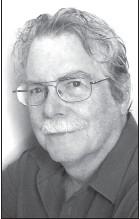

Charles Mosher
In 1609, Galileo used his eyes and a crude telescope to watch what the sky was doing. To learn its truth. He saw that the Sun did not revolve around the Earth.
The problem for him — and for all humanity— was that the Earth feels stable. Unmoving. (Somehow that 1,037 MPH that we’re spinning feels like immobility).
So, at the time, people believed Earth to be the center of the known universe. Everything else up there — including the sun — revolved around them. And Society (which at the time was pretty much The Church) also believed that God created things that way.
Thus, Galileo’s report of Heliocentric (sun-centered) orbiting caused an uproar among powerful people (the ones who made “official” interpretations of the Bible).
By 1615, his writings were being “examined” by the Inquisition and were declared to be heresy. Galileo was ordered to stop believing what his eyes revealed.
Ultimately, they threatened him with torture to make him “tell the truth” (i.e. say what they wanted). He was imprisoned and his writings were banned.
This was no empty threat. In 1600, the church had burned Giordano Bruno alive (not for long) for proposing that the universe was infinite.
Now we hit the fast forward button: Einstein called Galileo “the father of modern physics.”
Different years; another country: in 1846, Ignaz Semmelweis was a professor of obstetrics in Vienna General Hospital (Austria). There were two different maternity wards there.
The terror plaguing childbirth at the time was Puerperal Fever, a disease syndrome that occurred in women shortly after childbirth and frequently killed. This disease killed an average of 10 percent of all women delivering in the First Ward, but only averaged 3-4 percent in the Second Ward.
And everyone knew it. Pregnant women begged, often on their knees, to be admitted to the Second Ward.
“Fever” is now a term describing a symptom of some disease — most often, an infection. But in Semmelweis’ day the term was the name of a disease itself. Sometimes “The Fever” was pneumonia.
Puerperal Fever was sepsis — overwhelming infection spreading through the bloodstream rapidly. But the Germ Theory was unknown in Austria at the time and antibiotics were decades away in the future.
He examined several possible causes of Puerperal Fever, none of which explained or reversed the problem. Then one day (as all stories say) a fellow (male) physician died. Autopsy showed hallmarks of Puerperal Fever. This physician had been accidentally cut by the scalpel of a medical student while they were dissecting a cadaver in the anatomy lab.
Semmelweis made an epidemiologic discovery (although he didn’t use that term). The Second Ward with the lower death rate was staffed by midwives. The First ward by medical students who would sometimes come directly from anatomy lab to examine women in labor.
Something, Semmelweis postulated, was being transmitted from the cadavers to the women by the medical students’ hands. (Remember, still no awareness of bacteria there).
He required that everyone wash their hands in chlorinated solution between autopsy work and examination of women in the obstetrics ward. Deaths from Puerperal Fever on the ward fell from 18 percent to less than 2 percent (similar to the midwife ward), then to zero.
How was Semmelweis rewarded for this monumental advance in medical care? He was fired from the hospital and hounded by the medical community until he left town. He had confronted the accepted belief system of medicine at the time with a truth, and was punished for it.
Before we start howling “what stupid doctors!” or “what stupid men!” or “what stupid non-Americans!” let’s be aware that this is a frequent behavior of humans.
People keep smoking in spite of widespread information about cancer, heart attack and emphysema. People continue to support politicians who violate their promises and enact policies that hurt their voters. People eat meat yet profess to love animals.
What is inside us that makes us do such insane stuff as rejecting — often violently — new discoveries or proven truths which should change our habits, actions and beliefs for the better?
Turns out someone has slapped a label on it, which actually helps us to understand the process better. And that can (should) lead to changing our reactions to new discoveries and truths.
The term is Cognitive Dissonance, which we can translate to “internal stress due to information that is not consistent with our beliefs, values, attitudes or habits.”
This stress makes us very uncomfortable because it destabilizes what has been working for us for a long time. The problem is that this tension is often subconscious, so we can’t deal with it directly. Honestly. But we need relief! What do we do?
Way-all (Texas creeping in on me), there are a few ways we deal with Cognitive Dissonance.
We can rationalize the conflict away. For instance, Semmelweis’ colleagues probably functioned with “Illusory Superiority” bias (yeah, it’s an actual term used by social scientists). Basically, the colleagues believed themselves to be wiser, more knowledgeable than Semmelweis, so they could ignore his findings, get rid of him and find inner peace by continuing to believe what they’d always believed.
Or we can relieve the tension through denial. Galileo’s enemies just flat-out denied his findings because their interpretations of both the observed sky and the Bible were different. Dismiss his findings and the dissonance goes away.
It takes a lot of effort to pull off these tension-relieving justifications, so no wonder people react with anger.
There is a better way to resolve Cognitive Dissonance. We can change our behaviors. Or … we can change our beliefs.
Yeah, that means admitting mistakes. Or losing control. Or feeling a blow to our egos. Which probably explains why it doesn’t happen as often or as quickly as we wish (in others, usually).
So, with all that said, what’s on the medical/scientific horizon that may trigger Cognitive Dissonance? And understanding the above, can we respond differently this time?
* * * * *
I learned, and am still learning, two distinct approaches to medicine, to understanding the human body in health and illness.
The first is anatomy: where everything is and how it’s shaped from the biggest (the brain) to the smallest (a single cell). The second approach (which is much harder to learn) is function: how things work. From the simple (a muscle) to the nearly incomprehensible (the brain again).
We need to know how things work when everything is healthy and normal and how that function is disrupted by illness or chemicals (including drugs).
We can’t experiment with people, so we’ve studied animals and hoped that we could extrapolate to humans. But just because a drug works a certain way in animals, or a disease attacks a certain way, or a therapy works in animals doesn’t guarantee a similar functional process in humans.
So what could be a major advance in medicine and health would be to have human cells, tissues or organs to study such functioning without using living people. That’s where chimeras fit in.
Chimeras are living beings that carry the cells of more than one individual. Like grafted plants.
Here’s what chimeras are not: Unlike the mythical creature bearing this name, they are not hybrids. They are not half human and half animal. They are not made from human embryos.
In fact, there are thousands of chimeras walking around among us. Some are natural chimeras. In these cases, two ova (eggs) were fertilized and, very early in development, fused into one. What might have been twins ended up being one person.
They lead normal lives and most are unaware that they carry two different sets of cells. One source estimates that this occurrence may be as common as 20 percent of all pregnancies (National Society of Genetic Counselors, Feb. 2020).
Other chimeras among us were artificially created when they received a blood transfusion, bone marrow transplant or organ transplant. They carry their cells and also the cells of the donors. Bone marrow transplant can change a person’s blood type.
To better understand function in humans when disease invades or when pharmaceuticals are used, animals can have human cells implanted and the living animal will grow human cells or tissues.
Another massive potential benefit could be realized if the human cells are introduced early in development such that entire organs of human origin grow in the animal.
Currently in the U. S., more than 100,000 people are on a list waiting to receive transplant organs because their own organs are failing. A new person needing an organ is added to the list every eight minutes.
But there are way fewer donors than people who need the organs, so 17 people die every day from failure to get a donor organ in time (National Institutes of Health).
And even when a donor steps up to volunteer, the recipient and donor may not be compatible immunologically. Animals are not compatible — their genes dictate vastly different immunity from humans and, with rare exceptions, the recipient’s immune system would reject the organ (NIH).
But organs which are human, although grown in animals, have the potential to save a lot of lives.
There are serious ethical issues in addition to many scientific hurdles in developing animals to carry human cells — chimeras — and ethical guardrails will protect both humans and animals.
But the potential for good, for advances in medicine and health, is great (Science Literacy Project Oct 2016).
The important thing is for the public to learn the facts about this and not react to their Cognitive Dissonance with anger, denial or a dysfunctional clinging to “the way things have always been.”
The potential benefit will be there for all of us, especially the people who need a new organ at the rate of one every eight minutes.
Dr. Charles Mosher, M.D., M.P.H., was Mariposa’s county health officer from 1988-2014. Prior to his work at Mariposa County, Mosher served in the Peace Corps, worked for the state of Georgia and served for 11 years with the Merced County Health Department. He can be reached at author@greaterstory.com.







Responses (0)